Understanding Froude Numbers: Categorizing High-Speed Crafts
When it comes to marine engineering and naval architecture, understanding the dynamics of watercraft is crucial for optimizing performance and safety. One key concept in this field is the Froude Number (Fr), a dimensionless number that helps categorize different types of high-speed crafts based on their speed and wave-making characteristics. In this article, we'll delve into what Froude Numbers are, how they are calculated, and their practical applications in categorizing high-speed crafts.
What is a Froude Number?
The Froude Number is a dimensionless parameter used in fluid dynamics to compare the inertial forces to the gravitational forces acting on a fluid. It is named after the English engineer and hydrodynamicist, William Froude. The Froude Number is particularly important in the design and operation of ships and boats as it describes the ship's wave-making resistance and helps predict the hull speed and wave patterns.
Formula to Calculate Froude Number
The Froude Number is calculated using the following formula:
[ \text{Fr} = \frac{V}{\sqrt{gL}} ]
Where:
- ( V ) is the velocity of the ship (in meters per second),
- ( g ) is the acceleration due to gravity (approximately ( 9.81 m/s^2 )),
- ( L ) is the length of the ship at the waterline (in meters).
Applications of Froude Numbers in High-Speed Crafts
Froude Numbers are particularly useful in the categorization and design of high-speed crafts. Here are some key applications:
-
Design Optimization: By understanding the Froude Number, engineers can design hull shapes that minimize wave resistance at certain speeds, enhancing fuel efficiency and speed.
-
Safety and Stability: High Froude Numbers can indicate potentially unsafe operating conditions where the craft may experience excessive pitching or heaving. Designers use this information to adjust hull designs or recommend safe operating speeds.
-
Performance Benchmarking: Comparing the Froude Numbers of different crafts allows designers and operators to benchmark performance characteristics and make informed choices about craft design and operation.
Examples of High-Speed Crafts and Their Froude Numbers
- Hydrofoils: These crafts operate at high Froude Numbers, typically above 0.5, allowing them to lift out of the water and reduce drag significantly.
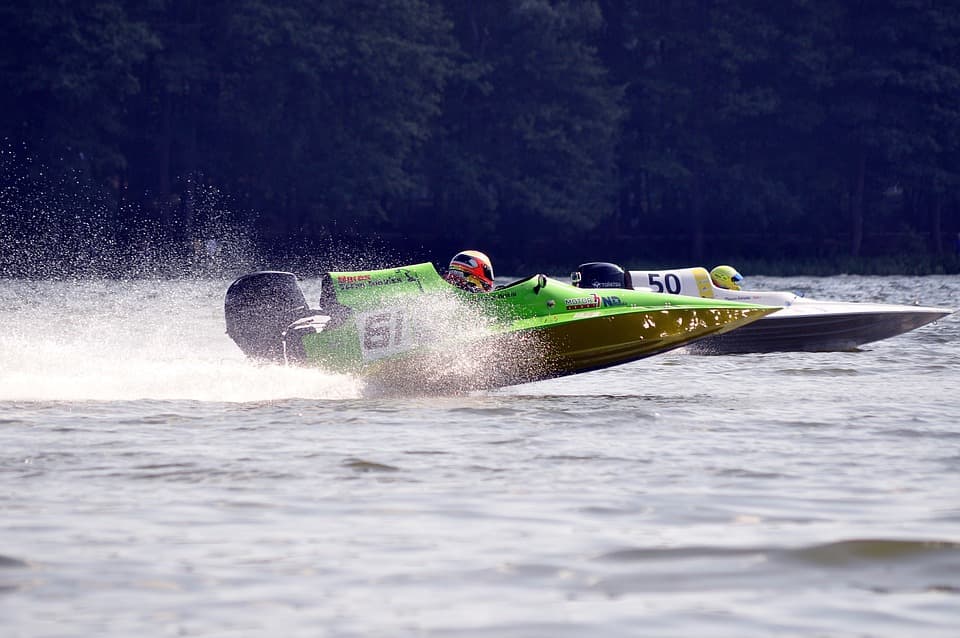
- Planing Powerboats: Often operating with Froude Numbers between 0.3 and 0.8, these boats are designed to ride on top of the water at high speeds.
- Wave-Piercing Catamarans: Known for their ability to maintain high speeds with moderate Froude Numbers, these crafts efficiently manage wave resistance.
Conclusion
Understanding and applying the concept of Froude Numbers is essential for the efficient and safe design of high-speed watercraft. By categorizing crafts based on their Froude Numbers, engineers can optimize designs to achieve better performance and safety. Whether you're a marine engineer, a boat designer, or simply a marine enthusiast, grasping the basics of Froude Numbers can provide deeper insights into the dynamics of high-speed marine travel.
For further information or personalized assistance on marine engineering topics, feel free to chat with Mavyn GPT or connect with one of our human experts at Mavyn. We're here to help you navigate the complexities of marine design and engineering with ease.