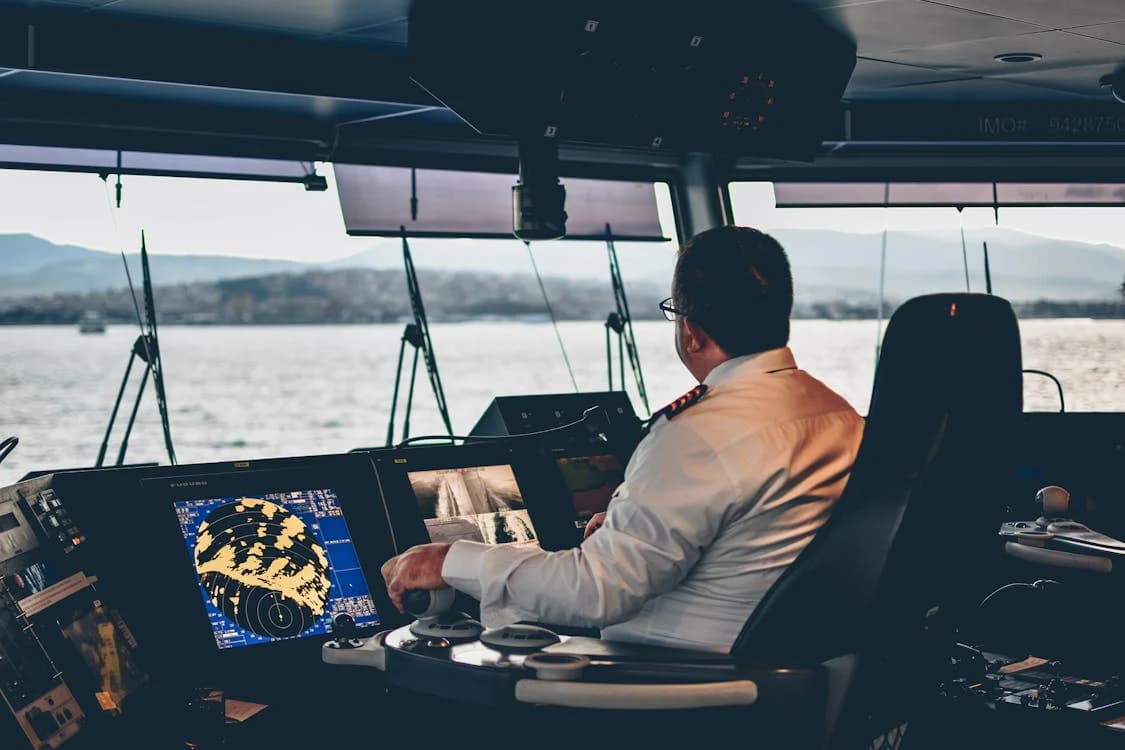
The Evolution of Maritime Navigation: From Stars to Satellites
Maritime navigation, a critical aspect of seafaring, has undergone a remarkable transformation over the centuries. From the ancient reliance on the stars to the sophisticated use of satellites, this evolution reflects broader technological advancements and the increasing demands of global maritime operations. In this article, we'll explore the key stages in the development of maritime navigation tools and techniques, highlighting how these changes have shaped the modern shipping industry.
Shop Boat Steering Equipment Now
Ancient Methods: Celestial Navigation
Star Gazing
In ancient times, mariners navigated by observing the stars, sun, and planets. The North Star (Polaris), in particular, was crucial for navigation in the Northern Hemisphere as it remains relatively fixed in the sky.
Using Simple Tools
Simple instruments like the astrolabe and the cross-staff were used to measure the angles of celestial bodies above the horizon, helping to determine latitude.
Example:
- Vikings used the sunstone, a type of crystal, to locate the sun's position on cloudy days.
The Age of Exploration: Compass and Maps
Magnetic Compass
The introduction of the magnetic compass in the 12th century revolutionized navigation. It allowed mariners to determine direction relative to magnetic north, irrespective of visibility conditions.
Development of Cartography
Accurate maps and charts became invaluable as Europeans began exploring beyond the Mediterranean. Portolan charts, for instance, detailed coastal contours, harbors, and seaports.
Example:
- Christopher Columbus in 1492, used a combination of dead reckoning, celestial navigation, and rudimentary charts on his voyage to the New World.
17th to 19th Century: Precision Instruments
The Sextant
Invented in the early 18th century, the sextant allowed more precise measurements of celestial bodies' angular heights. This tool was crucial for calculating longitude and latitude more accurately.
Chronometer
The marine chronometer, developed by John Harrison in the 18th century, enabled sailors to determine longitude by providing an accurate time reference at sea, a revolutionary development in maritime navigation.
Example:
- James Cook’s voyages across the Pacific Ocean were greatly aided by the use of a marine chronometer.
20th Century: Electronic Navigation
Radio Navigation
Systems like LORAN (Long Range Navigation) and later, Omega, used radio signals to determine a ship's position relative to fixed terrestrial transmitters, marking the beginning of electronic navigation.
Radar Technology
Introduced during World War II, radar (Radio Detection and Ranging) allowed ships to detect other vessels and land obstacles in poor visibility, significantly enhancing maritime safety.
Modern Era: Satellite Navigation
Global Positioning System (GPS)
The advent of GPS has provided unprecedented accuracy in position-fixing. Using a network of satellites, GPS offers real-time positioning and timing information anywhere on the globe.
Automatic Identification System (AIS)
AIS is used for tracking vessel movements and navigational status by electronically exchanging data with other nearby ships, AIS base stations, and satellites.
Example:
- Modern Container Ships rely on GPS for routing and AIS for traffic management, ensuring efficient and safe passage through busy sea lanes.
Conclusion
The evolution of maritime navigation from relying on the stars to utilizing satellites illustrates humanity's ingenuity and adaptability. Each advancement has not only enhanced the safety and efficiency of maritime travel but also interconnected our world in ways previously unimaginable.
At Mavyn, we understand the importance of both historical knowledge and modern technology in solving today’s challenges. Whether you need insights from a human expert in maritime history or technical assistance with the latest navigation technology, Mavyn offers both AI and human expert services to provide you with the answers you need.
For more fascinating insights and expert guidance, connect with us at Mavyn, where history meets technology.